¿Qué puede aportar a tu negocio el seguimiento de la colada mediante RFID?
El seguimiento de ropa mediante RFID ayuda a las lavanderías, los hoteles, los centros sanitarios y los proveedores de servicios de uniformes a identificar los textiles, registrar sus movimientos y mantener datos de inventario más fiables. Al combinar etiquetas RFID lavables, lectores y software, las empresas pueden reducir el trabajo manual, mejorar el control de la circulación y tomar mejores decisiones a lo largo de todo el ciclo de vida de los textiles.
Las grandes empresas textiles gestionan miles —o incluso cientos de miles— de ropa de cama, uniformes, toallas, alfombrillas y otros artículos textiles reutilizables. Estos activos se desplazan continuamente entre los procesos de recogida, clasificación, lavado, almacenamiento, envío y las instalaciones de los clientes.
Cuando los registros se basan principalmente en el recuento manual, la identificación visual o la lectura individual de códigos de barras, puede resultar difícil mantener unos datos de inventario precisos y actualizados.
Seguimiento de la ropa mediante RFID ofrece una forma más eficaz de identificar múltiples prendas y registrar su movimiento en puntos operativos clave. Cada prenda está equipada con una etiqueta RFID lavable y única, lo que permite a los lectores y al software recopilar y gestionar la información de las prendas a lo largo de todo el ciclo de lavado.
Cómo funciona el seguimiento de la ropa mediante RFID
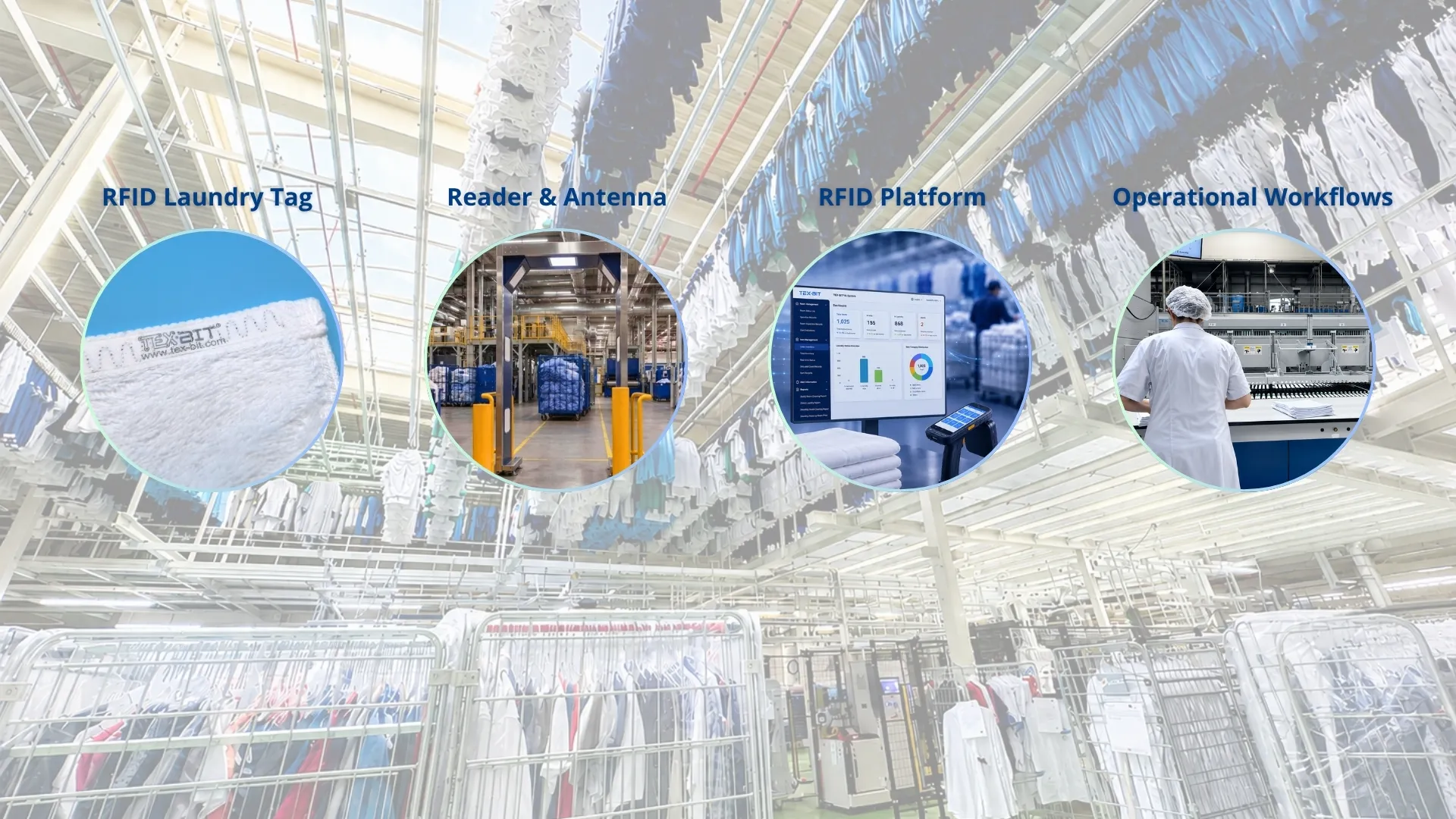
Un sistema de seguimiento de ropa mediante RFID suele incluir cuatro elementos principales:
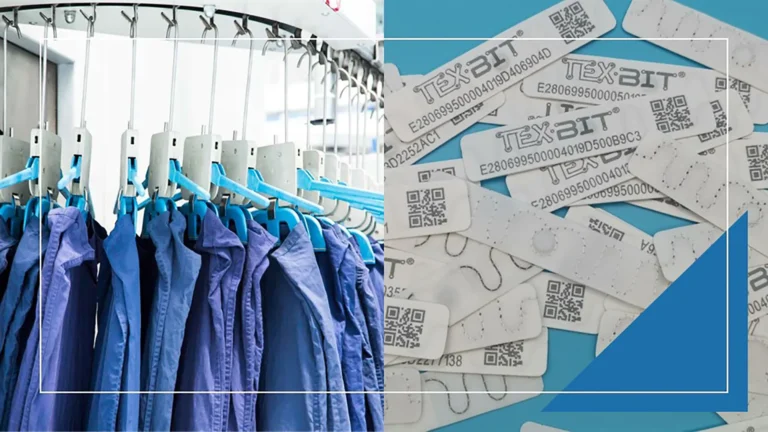
Etiquetas RFID para lavandería
En cada pieza de ropa de cama, prenda o artículo textil se coloca o se integra una etiqueta RFID resistente. La etiqueta contiene una identidad digital única que permanece asociada al artículo durante toda su vida útil.
Los lectores detectan múltiples tejidos etiquetados sin necesidad de un escaneo con línea de visión directa. Dependiendo del flujo de trabajo, pueden instalarse en puntos de recepción, áreas de clasificación, zonas de almacenamiento, portales, armarios o estaciones de envío.
Los datos recopilados se convierten en registros operativos, como el estado de las prendas, su ubicación, el número de lavados, la asignación a clientes o el historial de envíos.
Flujos de trabajo operativos definidos
La tecnología RFID aporta el máximo valor cuando los puntos de lectura y los registros del software se ajustan a los procesos textiles reales, incluyendo la entrada en lavandería, la salida de lavandería, la clasificación, el almacenamiento, la entrega y la devolución.
Qué puede ofrecer el seguimiento de la colada mediante RFID
1. Reducir el recuento manual y facilitar la clasificación
El recuento manual y el escaneo de códigos de barras pueden requerir mucho tiempo en operaciones de lavandería de gran volumen. Es posible que haya que manipular, identificar o escanear las prendas una por una, lo que aumenta las necesidades de mano de obra y la posibilidad de que se produzcan errores.
Los lectores RFID pueden identificar varios artículos etiquetados en un solo proceso de lectura. Esto permite reducir los recuentos repetitivos durante la recepción, los controles de existencias, la preparación de pedidos y la expedición.
Cuando los datos RFID se vinculan con reglas de flujo de trabajo definidas, el sistema también puede ayudar a distinguir entre tipos de tejidos, clientes, lotes o requisitos de procesamiento. De este modo, el personal puede utilizar la información mostrada para dirigir los artículos a la zona de clasificación o procesamiento adecuada.
La tecnología RFID no clasifica automáticamente los textiles por sí sola. La clasificación automatizada requiere equipos de lectura adecuados, una lógica de software y la integración con el sistema de manipulación o de cintas transportadoras de la lavandería.
2. Crear registros más fiables de los ciclos de lavado
El número de ciclos de lavado que ha completado una prenda puede proporcionar información útil sobre su uso y su vida útil prevista.
Sin registros a nivel de artículo, las empresas suelen basarse en medias estimadas a la hora de planificar la sustitución de los productos textiles. Esto puede dificultar determinar si los artículos se retiran demasiado pronto, se utilizan más allá de su vida útil prevista o circulan de forma desigual.
Cuando los textiles etiquetados pasan por los puntos de lectura configurados, ya sea al entrar o al salir del proceso de lavado, el software puede actualizar su historial de procesamiento. Con el tiempo, estos registros pueden ayudar en las operaciones:
- Analizar los patrones de uso de los textiles
- Calcular las necesidades de reposición
- Identificar los artículos que se acercan a los límites definidos de su ciclo de vida
- Comparar el uso en distintos tipos de tejidos o ubicaciones
- Mejorar la planificación de las compras y de la jubilación
La precisión de los registros de los ciclos de lavado depende de cómo defina el sistema cada ciclo de lavado y de si las prendas pasan de forma sistemática por los puntos de lectura requeridos.
3. Mejorar la visibilidad del inventario
Los grandes stocks de textiles se distribuyen constantemente entre diferentes ubicaciones. Los artículos pueden encontrarse en la lavandería, en un hotel o un centro sanitario, almacenadas, en tránsito o a la espera de ser procesadas.
Los controles manuales de inventario solo ofrecen una visión puntual y pueden quedar desactualizados en cuanto los textiles vuelvan a moverse.
El seguimiento de la colada mediante RFID permite generar registros más puntuales en puntos operativos específicos. Los responsables pueden utilizar estos registros para comprender:
- Lo que se ha recibido o devuelto
- Lo que se ha enviado
- Lo que queda almacenado
- Lo que hay actualmente en circulación
- ¿Qué falta en un lote previsto?
- ¿Qué cliente o establecimiento fue el último en recibir un artículo?
La visibilidad de la tecnología RFID es mayor en los puntos de lectura controlados. El sistema no muestra automáticamente la posición física exacta de cada prenda, a menos que se haya instalado la infraestructura de lectores necesaria en esas zonas.
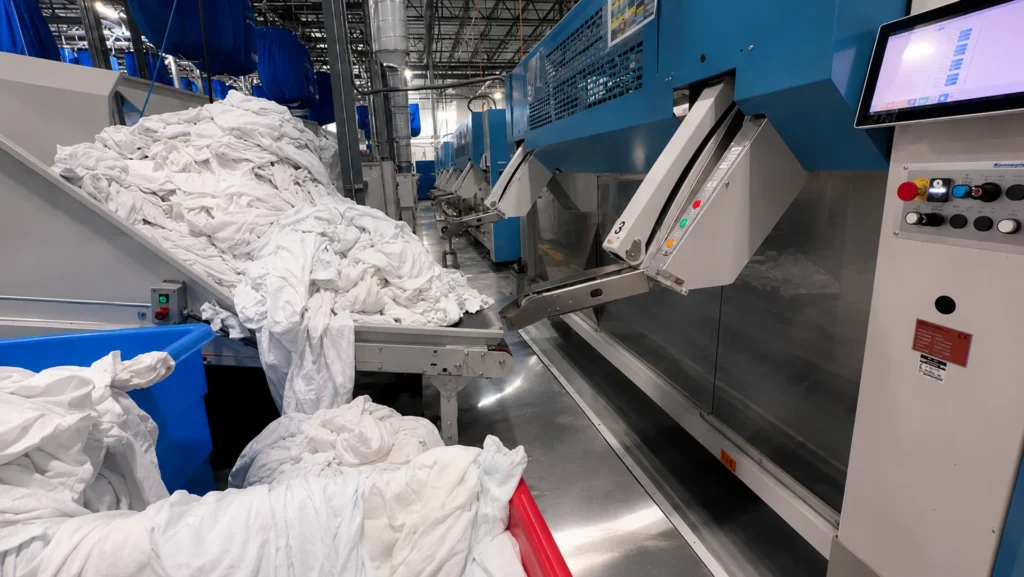
4. Reducir las pérdidas y mejorar la rendición de cuentas
La pérdida de productos textiles puede deberse a extravíos, envíos erróneos, devoluciones incompletas, errores en los procesos o sustracciones no autorizadas. En las grandes empresas, a menudo resulta difícil determinar dónde se ha producido la falta de stock.
La tecnología RFID no evita físicamente las pérdidas ni los robos, pero ofrece registros más fiables para identificar las discrepancias.
Cada etiqueta RFID contiene un identificador único. Cuando se registra un artículo en los puntos de recepción, almacenamiento, envío o entrega al cliente, el sistema puede mantener un historial de su último estado operativo conocido.
Esto ayuda a las empresas a:
- Detectar antes los artículos que faltan
- Comparar las cantidades de devolución previstas y las reales
- Identificar las faltas de existencias recurrentes en puntos concretos del flujo de trabajo
- Mejorar la rendición de cuentas entre departamentos o sedes
- Averiguar dónde se registró por última vez un artículo
Una visibilidad más temprana permite a los equipos disponer de más tiempo para investigar y solucionar los problemas antes de que se conviertan en pérdidas recurrentes de existencias.
5. Reforzar el control de entradas, salidas y circulación
Las empresas de alquiler de textiles y servicios de lavandería suelen tener que gestionar el traslado de artículos entre la lavandería y las distintas instalaciones de los clientes.
Los registros RFID permiten asociar los artículos textiles a un cliente, un pedido, un lote, una sala, un departamento o una ruta de reparto. Durante los procesos de salida y devolución, los lectores pueden detectar los artículos etiquetados y compararlos con el registro de la transacción prevista.
Esto permite:
- Verificación más rápida de los envíos
- Entregas a los clientes más precisas
- Registros de devoluciones más claros
- Conciliación a nivel de lote
- Mayor control sobre los movimientos de los textiles limpios y sucios
- Informes de inventario a nivel de cliente más fiables
En el caso de las lavanderías industriales, esto permite mejorar el seguimiento operativo entre la recogida, el procesamiento, el almacenamiento, el envío y la devolución al cliente.
6. Favorecer una mejor planificación del ciclo de vida de los textiles y de los recursos
Una gestión eficiente de los textiles no consiste únicamente en reducir la mano de obra, sino que también implica aprovechar mejor el stock de textiles que ya está en circulación.
Los datos de RFID pueden ayudar a las empresas a saber qué artículos se utilizan con frecuencia, cuáles están infrautilizados y dónde puede ser necesario o no aumentar las existencias.
Un registro más fiable del ciclo de vida puede contribuir a:
- Mejor distribución de las existencias textiles
- Reducción del exceso de existencias innecesario
- Una planificación de la sustitución más fundamentada
- Menor dependencia de las compras de emergencia
- Un uso más prolongado y constante de los recursos textiles adecuados
- Una evaluación más precisa del rendimiento de los tejidos
La tecnología RFID por sí sola no reduce directamente el consumo de agua ni de energía. Sin embargo, disponer de mejores datos sobre la circulación, el inventario y el ciclo de vida puede contribuir a que las decisiones de compra y de gestión sean más eficientes.
¿En qué ámbitos aporta mayor valor el seguimiento de la colada mediante RFID?
Merece especialmente la pena valorar el uso de la tecnología RFID cuando una empresa presenta las siguientes características:
- Grandes cantidades de textiles reutilizables
- Desplazamientos frecuentes entre varias ubicaciones
- Recuento manual repetitivo o escaneo de códigos de barras
- Pérdidas importantes de productos textiles o costes de sustitución
- Requisitos complejos de registro de entrada y salida a nivel de cliente
- Necesidad de registros sobre los ciclos de lavado o el ciclo de vida
- Puntos operativos definidos en los que se pueden instalar lectores RFID
- Personal y procesos preparados para utilizar los datos recopilados de forma coherente
Es posible que las empresas más pequeñas, con un movimiento de productos textiles limitado y controles manuales fiables, no necesiten el mismo nivel de infraestructura RFID.
Por lo tanto, el valor de la tecnología RFID debe evaluarse teniendo en cuenta el volumen de productos textiles, las necesidades de mano de obra, los niveles de pérdidas, la complejidad operativa y los registros específicos que necesita la empresa.
Para montar un sistema completo de seguimiento de ropa mediante RFID se necesita algo más que etiquetas
Las etiquetas RFID lavables dotan a cada prenda de una identidad única, pero las etiquetas por sí solas no constituyen una solución completa de seguimiento.
Una implementación eficaz suele combinar:
- Etiquetas RFID para ropa apto para el sector textil y de la lavandería
- Dispositivos lectores y antenas situados en puntos operativos relevantes
- Software o una plataforma RFID para convertir las lecturas en registros útiles
- Flujos de trabajo definidos para la recepción, clasificación, lavado, almacenamiento, envío y devolución
La combinación adecuada depende del tipo de textiles, el entorno operativo, los puntos de lectura necesarios, la estructura de la clientela y los objetivos empresariales.
Conclusión
El seguimiento de la ropa mediante RFID puede reducir las tareas repetitivas de recuento, mejorar los registros de inventario, facilitar el control de la circulación de los textiles y proporcionar información más útil sobre su ciclo de vida.
Sin embargo, el éxito de la implementación no depende únicamente de la elección de una etiqueta RFID lavable. La ubicación de los lectores, la lógica del software, los procedimientos operativos y la aceptación por parte del personal influyen en la fiabilidad de los registros finales.
Las empresas que estén considerando la implantación de la tecnología RFID deberían empezar por identificar sus principales retos operativos, los volúmenes de productos textiles, los puntos de movimiento y los datos necesarios. Esto sienta unas bases más claras para seleccionar las etiquetas, los lectores y el enfoque de implantación adecuados.
¿Estás planeando un proyecto de lavandería con tecnología RFID?
Comparte con nuestro equipo tu aplicación textil y tus requisitos operativos.