
TEX-BIT at DTV: Advancing Data Transparency in Textile Operations
TEX-BIT participated in the DTV Annual Congress in Dresden for the second consecutive year, engaging with the German textile service industry on RFID, digitalisation and textile data transparency.
TEX-BIT recently participated in the DTV Annual Congress 2026 in Dresden, marking our second consecutive year at the event.
As a DTV member, we value the opportunity to stay close to the German textile service industry. During this year’s congress, our team had extensive discussions with laundry groups, textile companies, workwear service providers, customers, partners and other industry professionals.
Compared with our first participation in 2025, these conversations went further into practical questions around textile operations, digitalisation and the role of reliable data in managing increasingly complex textile flows.
For TEX-BIT, this direct industry exchange is particularly valuable. It helps us understand not only where technology is being adopted, but also where existing systems still face operational challenges.
From RFID to Textile Data Transparency
One direction became increasingly clear through our discussions in Dresden: the value of RFID is moving beyond identification itself.
RFID provides the connection between physical textiles and digital systems. But the long-term value lies in what organisations can do with reliable data throughout the textile lifecycle.
From manufacturing and distribution to customer use, collection, laundry and redistribution, textiles move through multiple organisations, locations and operational stages. Better visibility across these movements can support inventory control, process optimisation, loss management and more informed lifecycle decisions.
This is the direction behind TEX-BIT’s focus on textile data transparency.
It also reflects why our work has gradually expanded beyond washable RFID transponders into RFID read systems, intelligent devices, software and an integrated textile operations platform.
The objective is not to add more technology to the process. It is to create a more reliable connection between physical textile movements and the operational data needed to manage them.
Built Around Real Textile Operations
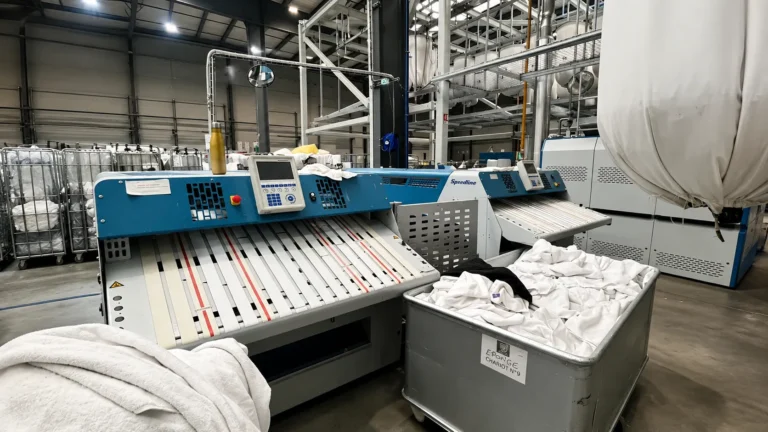
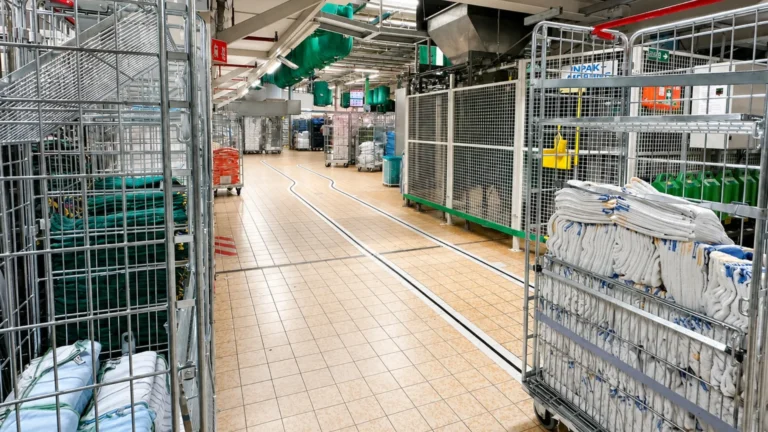
Nearly ten years of laundry RFID experience in Central and Western Europe and North America has shown us that textile digitalisation cannot be developed only from a technical specification.
Laundry environments are demanding. Textile types, operating processes, system architectures and management priorities differ from one organisation to another. As we have discussed in Why Textile RFID Systems Fail — And What the Industry Is Finally Learning, long-term RFID reliability depends on how technology, data and operational processes work together.
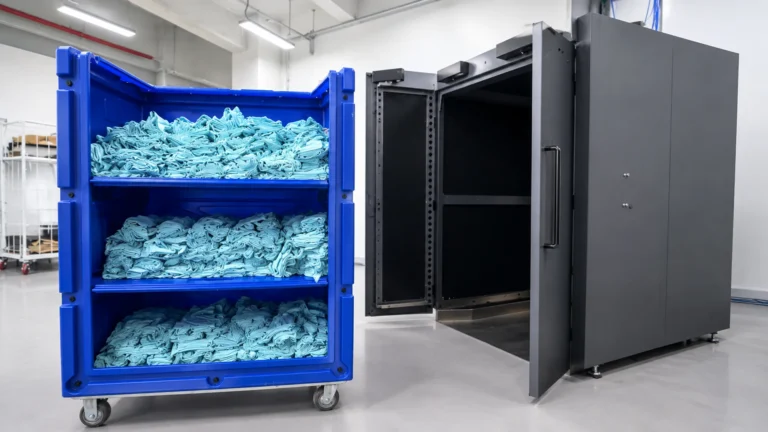
The RFID transponder itself remains an important part of that foundation. Its durability, installation, RF performance and production consistency all need to be evaluated against real laundry conditions. Our guide on how to evaluate RFID laundry tags for industrial laundry applications looks at these factors in greater detail.
This is why the TEX-BIT team continues to work close to real textile operations — understanding workflows, identifying where data is lost or becomes unreliable, and evaluating how new technologies can solve practical problems.
Our capabilities today span RFID, devices, software, SaaS and emerging AI applications, allowing us to approach textile digitalisation as a connected operational challenge rather than an isolated hardware deployment.
In 2025, the TEX-BIT AI RFID Digital Textile SaaS Platform received the Clean Show Innovation Award for Best New Technology for Automation in Orlando.
Looking Ahead: A More Transparent Textile Lifecycle
The conversations at DTV Annual Congress 2026 also reinforced a broader industry direction.
Textile service organisations are increasingly being asked to understand not only what textiles they have, but also where those textiles have been, how they have been used and what happens to them throughout their lifecycle.
Operational efficiency remains important, while resource efficiency, lifecycle information and sustainability-related requirements are adding new dimensions to textile management.
For TEX-BIT, this makes data transparency increasingly relevant.
We believe the future of textile management will require stronger digital connections across textile manufacturers, laundries, textile service providers and end users. RFID can provide an important identification layer, while reliable systems and operational data turn that identification into meaningful visibility.
Our role is to continue developing the technologies and practical implementation capabilities needed to support that transition.
Continuing the Conversation
We appreciate the open and in-depth discussions we had in Dresden and the opportunity to better understand the priorities and challenges facing the German textile service industry.
For TEX-BIT, DTV is more than an annual industry gathering. It provides an important opportunity to listen, exchange practical experience and stay connected with the people managing textile operations every day.
As we continue our work across Western Europe, Central Europe and North America, we remain focused on turning RFID identification into reliable digital visibility across textile operations.
From RFID to reliable textile data. From identification to greater transparency.
If you are facing challenges with RFID deployment, data reliability or digital textile management, we welcome the opportunity to discuss your actual operation and explore where TEX-BIT can support you.
Facing Challenges with Textile RFID?
Whether you’re improving an existing RFID system or exploring textile digitalisation, let’s discuss your operational needs and potential solutions.