
Why Textile RFID Systems Fail — And What the Industry Is Finally Learning
Textile RFID adoption is accelerating across industrial laundries, hospitality groups, uniform service providers, and other textile-related industries. Companies are investing in RFID to improve textile visibility, reduce losses, strengthen inventory control, and create more transparent operational processes.
However, after years of working with RFID technology and participating in hundreds of real-world deployments, one lesson has become increasingly clear:
Textile RFID systems rarely fail because of RFID technology itself.
The real challenges usually come from the interaction between technology, operational processes, data management, and real working environments. RFID is not simply about attaching a tag to a textile item and reading it automatically. A successful textile RFID system requires the alignment of hardware, workflows, data logic, and business requirements.
Why Textile RFID Projects Fail in Real Operations
Many companies initially believe RFID problems come from:
- RFID tags with insufficient performance;
- unreliable RFID readers;
- software limitations.
While these components are important, they are rarely the only reason behind unsuccessful deployments. In real textile operations, RFID projects often struggle because of several deeper challenges.
Poor Operational Discipline
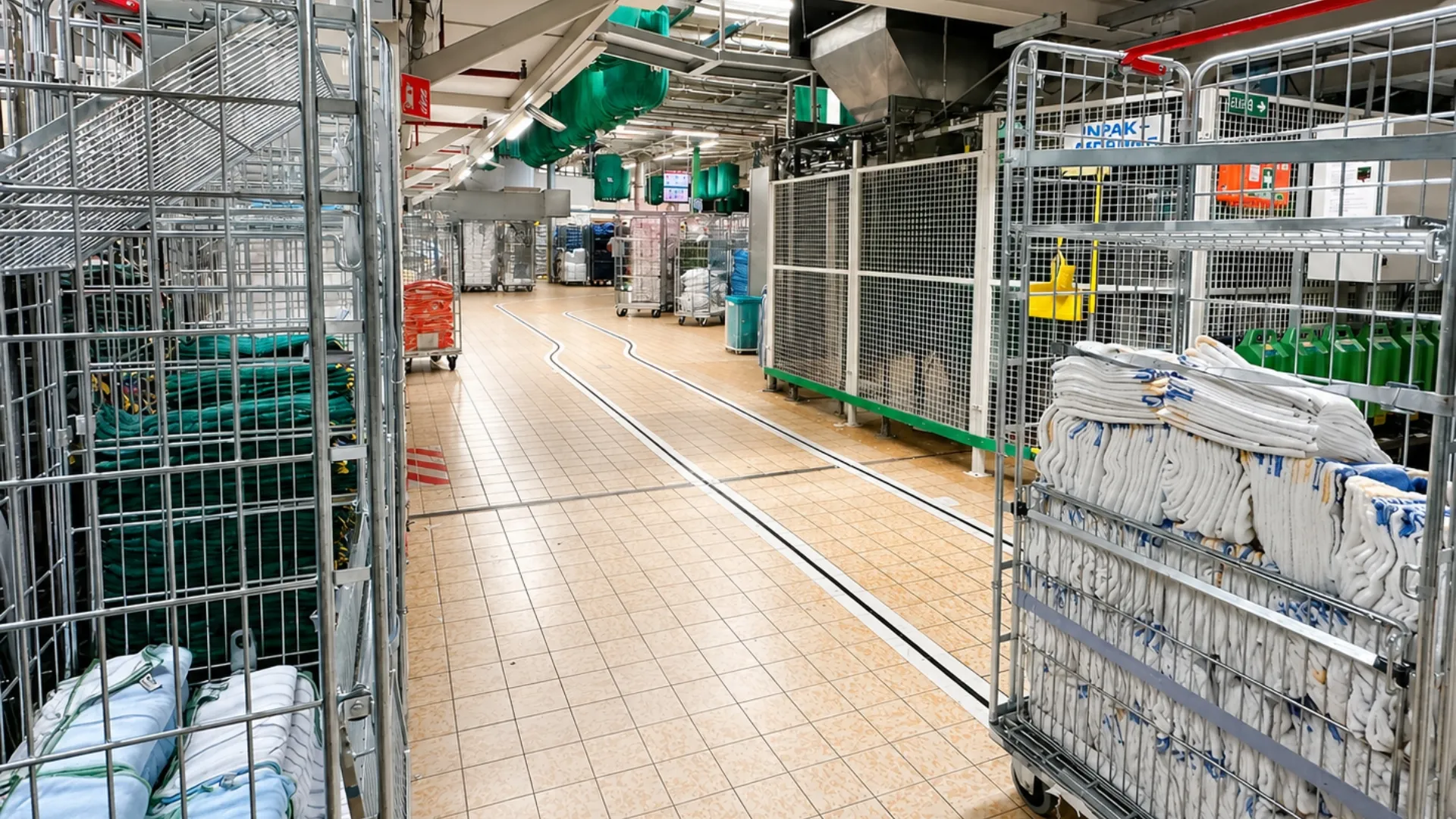
RFID systems depend on consistent operational processes. Textile movement involves many different activities, including receiving, sorting, washing, finishing, storage, and distribution. If processes are unclear, scanning points are inconsistent, or operational procedures are not followed, even high-performance RFID technology cannot create reliable data.
Weak Process Control
Textile operations are complex environments. A laundry or textile service operation needs clearly defined workflows to ensure that textile movements can be correctly recorded. Without proper process control, RFID may collect large amounts of information, but the data may not accurately represent what is actually happening.
Disconnected Systems
RFID data does not create value by itself. It needs to connect with operational requirements such as inventory management, lifecycle tracking, service processes, and billing management. Without proper system integration, companies may collect more data while still gaining limited operational insight.
Inaccurate Lifecycle Data
The value of textile RFID depends on trustworthy lifecycle information. Missing scans, incorrect movements, or incomplete records can gradually reduce data reliability. Once confidence in the data is lost, the RFID system becomes much less valuable.
Inconsistent Textile Conditions
Textile environments are highly demanding. Different textile materials, washing processes, chemicals, temperatures, and handling conditions can all influence RFID performance. A solution that works well in a controlled test environment may not always perform the same way in daily operations.
Lack of Deployment Standards
Successful textile RFID implementation requires consistency. Tag selection, reader installation, antenna configuration, workflow design, and data management all need to be carefully planned. Without deployment standards, system performance can vary significantly between locations and processes.
Textile RFID Is a System Engineering Challenge
One of the biggest misunderstandings in textile RFID adoption is focusing too much on individual components.
A successful system is not:
- only a durable RFID tag;
- only a powerful RFID reader;
- only an RFID software platform.
It requires coordination between RFID engineering, textile characteristics, washing process control, reader field design, operational workflows, software algorithms, and business logic.
A high-performance RFID tag cannot compensate for poor operational processes. A sophisticated software platform cannot repair unreliable data collection, and a powerful reader system cannot solve uncontrolled textile movement.
The success of textile RFID depends on system integrity.
Real Textile Environments Are Not Laboratories
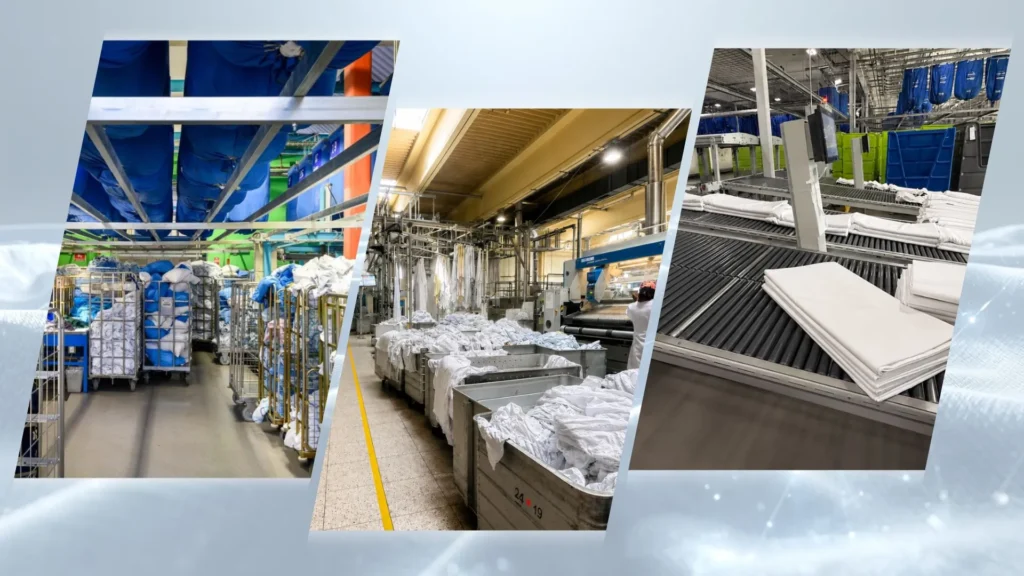
Industrial textile applications are among the most demanding environments for RFID. Textiles may experience repeated washing cycles, high temperatures, chemical exposure, mechanical stress, pressure during extraction, and ironing or finishing processes.
At the same time, RFID performance is influenced by the surrounding operational environment — from antenna positioning and electrical interference to trolley movement and changing working conditions. These realities make the selection of RFID tags designed for industrial textile applications an important part of overall system reliability.
Textile RFID must therefore be designed for reality, not just controlled testing. It is a technology system expected to perform consistently in demanding industrial environments every day.
Data Integrity Matters More Than Data Collection
Early RFID adoption often focused on one question: “How many items can we read?”
Today, the more important question is: “Can we trust the data?”
In real operations, perfect data collection is unrealistic. Textiles may miss a scanning point, move unexpectedly, remain temporarily outside standard workflows, or generate incomplete records.
A practical textile RFID system cannot depend on perfect human operation. It needs to account for operational exceptions while maintaining reliable lifecycle information.
What Reliable RFID Data Actually Means
An RFID read confirms that a tag was detected under certain conditions. It does not necessarily confirm that a textile item has completed a business transaction, changed ownership, or reached its intended destination.
For example, detecting linen near a dispatch area does not automatically prove that it was included in a confirmed delivery. Similarly, reading items at a laundry entrance does not necessarily establish an accurate receiving quantity without the appropriate workflow and transaction controls.
Reliable textile data therefore requires several levels of interpretation: identification records, operational events, confirmed business transactions, and reconciled inventory information. These records must be connected through clearly defined business rules and supported by appropriate verification procedures.
This distinction matters because a high RFID read rate does not automatically guarantee accurate inventory, reliable lifecycle histories, or correct billing. The quality of the final operational data depends on how physical movements are recorded, interpreted, and verified throughout the process.
Intelligent Data Management: Helping Systems Understand Reality
Modern textile RFID platforms need to do more than identify and count individual items. They need to help interpret incomplete operational information and maintain reliable records over time.
This can include automatic data correction, lifecycle reconstruction, abnormal movement analysis, inventory recovery, and fair billing calculations.
For example, a textile item may not be recorded at one expected checkpoint but appear again later in the process. Rather than relying entirely on manual correction, the system should be able to analyze subsequent events and reconstruct a more reliable lifecycle record.
However, inferred movements and reconstructed records should remain distinguishable from directly verified transactions. Where the available evidence is insufficient, exceptions may still require operational review or manual confirmation.
The goal is not simply to collect more data. The goal is to maintain trustworthy operational information.
What the Industry Is Finally Learning
Experience from real textile operations increasingly points toward a more practical approach to RFID digitalization. Successful deployment requires more than installing equipment and connecting software. It requires a clear understanding of operational processes, measurable objectives, and continuous verification of system performance.
Aligning Physical and Digital Workflows
Every RFID event should correspond to a clearly defined operational purpose. Receiving, sorting, washing, storage, dispatch, and customer delivery involve different responsibilities and transaction requirements.
Before designing RFID checkpoints, operators need to understand how textiles actually move through their facilities, where exceptions occur, and which events require verification.
This may involve adjustments to equipment placement, working procedures, staff responsibilities, or system logic. Digital workflows must reflect real operations, while physical processes need sufficient consistency to produce meaningful data.
Validate Before Scaling
A controlled pilot provides an opportunity to test not only RFID reading performance but also the accuracy of the resulting operational records.
Rather than introducing RFID across an entire operation immediately, companies can begin with a defined customer, textile category, or operational process. The pilot should cover representative working conditions and key transaction points, with results compared against independently verified physical movements and quantities.
Evaluation should consider missed reads, unexpected movements, transaction discrepancies, exception handling, and the reliability of inventory records. Operational benefits, implementation costs, and the ability to maintain consistent performance should also be assessed before expansion.
The purpose of validation is not simply to demonstrate that RFID technology works. It is to establish whether the complete process delivers dependable results under real operating conditions.
Continuous Improvement Beyond Deployment
RFID deployment is not the end of digitalization. Textile volumes, customer requirements, facility layouts, equipment conditions, and working procedures can change over time.
Regular reconciliation, exception analysis, equipment checks, and workflow reviews help identify where data quality begins to deteriorate. Corrective actions may involve hardware adjustments, revised procedures, improved system rules, or additional staff training.
A reliable textile RFID system should therefore be treated as an operational capability that requires ongoing management, rather than a one-time technology installation.
The Future of Textile RFID Is About Trust
The future of textile RFID is not simply about counting towels, uniforms, or linen faster. It is about creating greater trust across the textile ecosystem — between hotels, industrial laundries, textile service providers, and textile suppliers.
When operational data is reliable, different stakeholders can make better decisions, improve cooperation, and reduce uncertainty. RFID provides the identification technology, but the long-term value comes from the quality and integrity of the information built around it.
Data integrity is the real infrastructure behind successful textile digitalization.
Conclusion
Textile RFID has evolved far beyond simply identifying and counting individual items. The real challenge is building a system that remains reliable as textiles move through complex processes, demanding environments, and inevitable operational exceptions.
Successful textile RFID therefore depends not on any single component, but on the integrity of the entire system — from RFID hardware and reader deployment to operational workflows, data management, and business logic.
Reliable results also require clearly defined operational events, practical validation before expansion, and continuous attention to data quality after deployment.
The industry is gradually moving from asking “Can we read the tag?” to asking a more important question: “Can we trust the data?”
That shift matters because, in the long term, the value of textile RFID is not measured by how much data a system collects, but by how reliably that data reflects what is actually happening.
RFID is the technology that makes textile identification possible. Data integrity is what makes the system valuable.
Planning a Textile RFID Project?
Discuss your application, workflows, and operational requirements with our team.