How RFID Laundry Tags for Hotels Improve Linen Visibility
RFID laundry tags for hotels can provide clearer visibility into clean linen stock, linen distributed across hotel operations, hotel–laundry handovers, and inventory moving through the linen service cycle.
Hotels rely on a continuous supply of clean sheets, duvet covers, pillowcases, towels, bath linens, and other reusable textiles. Yet linen inventory is rarely held in one location or controlled by a single team.
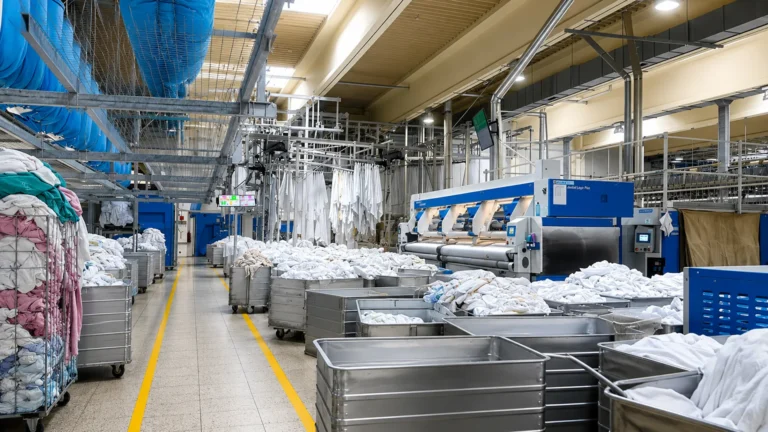
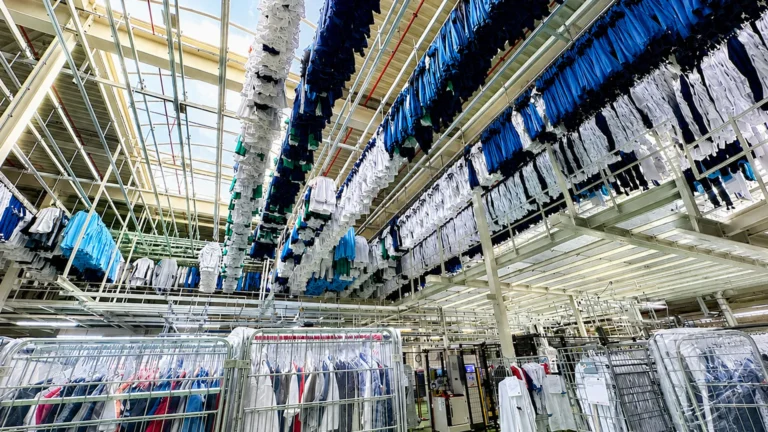
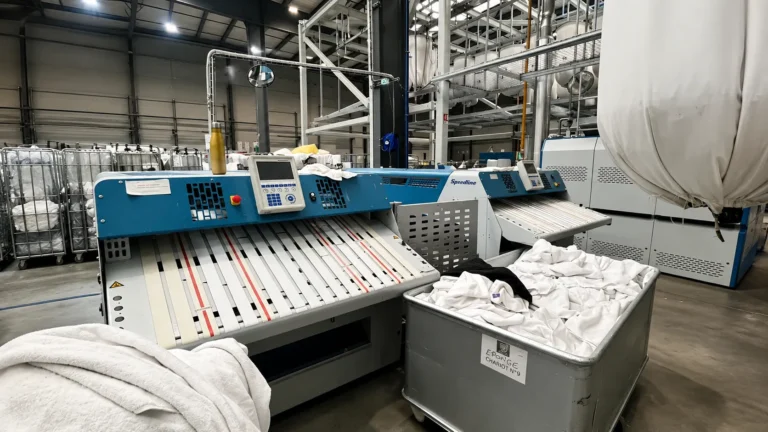
At any given time, linen may be stored in the central linen room, issued to floor linen closets, loaded onto housekeeping carts, in use in guest rooms, held in soiled-linen collection areas, in transit to or from the laundry, or undergoing sorting, washing, finishing, and order assembly at an off-site laundry facility.
Because linen is distributed across different locations and operational stages, a shortage does not always mean that the hotel owns too little stock. Linen may be available elsewhere in the service cycle but held in the wrong location, delayed in processing, retained within an operating department, or missing from the latest records.
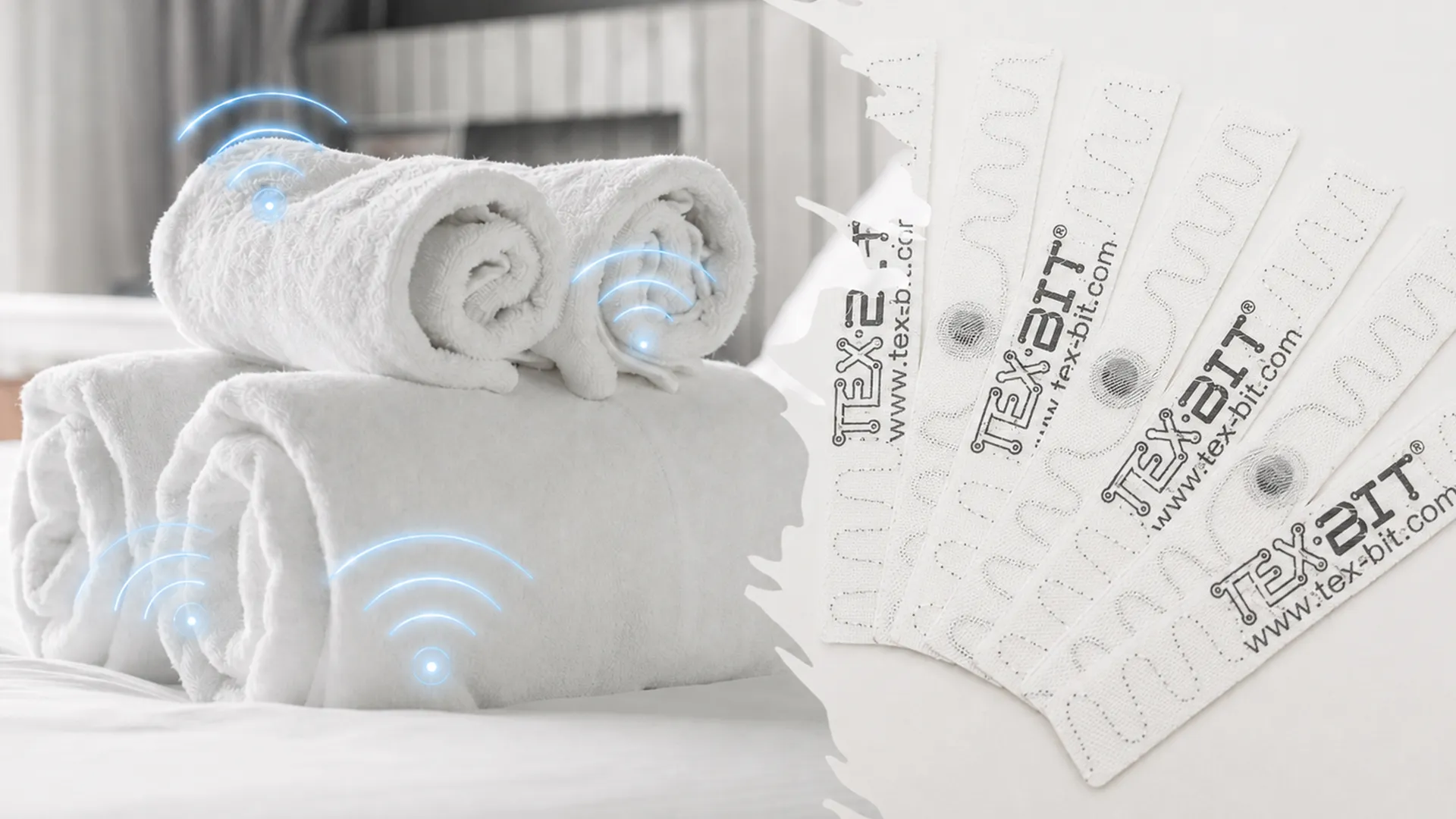
RFID laundry tags for hotels give each linen item a unique digital identity. When tagged linen passes through defined read points, hotels and laundry providers can create more reliable transaction records and gain a clearer view of how inventory is distributed across the linen service cycle.
Why Hotel Linen Visibility Is Difficult to Maintain
Hotel linen management is not simply a matter of knowing how many sheets or towels the hotel owns. The operational challenge is ensuring that the right quantity of clean linen is available where and when hotel operations require it.
Linen Is Distributed Across the Hotel
Clean linen is normally received into the central linen room before being issued to guest-room floors and other operating departments, including spa and food and beverage operations.
After use, soiled linen follows a separate route. It may be collected from guest rooms, consolidated at floor-level collection points, transferred to a central soiled-linen holding area, and prepared for collection by the laundry provider.
These movements are often controlled through standard linen-handling procedures rather than item-level transaction records. Management may know the total linen inventory or the quantity most recently delivered, but not how stock is currently distributed across the hotel.
As a result, the hotel may hold sufficient linen overall while still experiencing shortages on individual floors or within specific departments.
Physical Counts Provide Only a Temporary View
A manual stock count can confirm how much linen is present in a particular linen room at a specific time. However, that record begins to change as soon as linen is issued, transferred, collected, or delivered.
The central linen room may appear adequately stocked while floor linen closets are short of particular items. In other cases, departments may retain excess stock while additional linen is ordered because the distributed inventory is not visible to central management.
RFID does not replace well-defined linen-handling procedures. It can, however, provide more frequent and consistent transaction records without requiring every sheet, towel, or duvet cover to be counted individually.
Hotel–Laundry Handovers Create Reconciliation Gaps
Hotels that use an external laundry provider depend on repeated handovers of both soiled and clean linen.
Soiled linen is collected from the hotel, transported to the laundry, received and classified, processed through washing and finishing, assembled into the hotel’s clean-linen order, and dispatched back to the hotel.
When quantities are recorded manually at each handover, differences may arise between what the hotel releases, what the laundry receives, what enters production, and what is ultimately delivered back as clean stock.
These differences can result in repeated recounting, urgent replenishment requests, disputed balances, and uncertainty over whether linen is still at the hotel, in transit, or within the laundry operation.
How RFID Laundry Tags for Hotels Support Linen Visibility
A hotel linen RFID solution typically combines washable RFID tags, reader devices and antennas, and software that converts tag reads into meaningful operational records.
The objective is not to deploy RFID reader devices throughout every guest room, corridor, or floor linen closet. The priority is to capture linen at points where a meaningful handover, inventory movement, or status change occurs.
At Laundry Receiving and Dispatch
When soiled linen arrives at the laundry, tagged items can be identified in batches at inbound receiving. This creates a clearer record of the linen received from a particular hotel and provides a stronger basis for customer-level reconciliation.
After soil sorting, washing, drying, finishing, quality inspection, folding, and hotel order assembly, clean linen can be identified again before outbound dispatch.
The laundry can compare the tagged items prepared for shipment with the planned hotel order and investigate any differences before the linen leaves the facility.
This creates two important transaction records: the linen received from the hotel and the clean linen dispatched back to it.
At Hotel Linen Receiving
An RFID read point at the hotel’s linen receiving area can confirm the arrival of clean-linen deliveries.
Instead of relying solely on delivery documents or a complete manual recount, the hotel can create a digital receiving record for tagged linen entering the hotel. Differences between the laundry dispatch record and the hotel receiving record can therefore be identified earlier.
Once the delivery is confirmed, the system can update the clean stock available for internal allocation across the hotel.
Within Hotel Linen Operations
RFID may also support selected internal linen-room and distribution processes.
For example, a hotel may record linen entering or leaving the central linen room, linen issued to particular guest-room floors, or stock transferred between operating departments. The required level of detail depends on the size of the hotel, its linen-handling workflow, and the specific control problem being addressed.
A hotel does not necessarily need to record every movement between a floor linen closet and an individual guest room. In many cases, the greatest value comes from improving visibility at major handover and inventory control points.
RFID is most useful when it supports defined operational decisions rather than attempting to provide continuous real-time location tracking throughout the hotel.
What Better Linen Visibility Can Improve
Improved visibility is valuable only when it supports better operational decisions. For hotels, the most relevant outcomes usually relate to par-stock planning, hotel–laundry reconciliation, shortage investigation, and the workload of housekeeping and linen-room teams.
More Reliable Par-Stock Planning
Hotels maintain par stock to support expected occupancy, room turnover, laundry turnaround time, peak demand, and unexpected service disruptions.
When linen distribution and status are unclear, hotels may compensate by holding additional stock. However, increasing total inventory does not necessarily prevent shortages if linen is unevenly distributed or delayed within the service cycle.
RFID records can provide a clearer view of clean stock held at the hotel, linen distributed to operating departments, goods in transit, and inventory moving through laundry production.
This helps management distinguish between a genuine inventory shortage and a distribution, collection, or laundry-turnaround issue. It also provides a stronger basis for reviewing par levels and purchasing requirements.
Stronger Hotel–Laundry Reconciliation
RFID can create a more consistent transaction history across soiled-linen collection, laundry receiving, clean-order dispatch, and hotel delivery.
When quantities do not match, both parties can review the relevant transaction records rather than relying only on later physical counts or incomplete paperwork.
RFID does not guarantee that linen will never be lost, mis-sorted, or allocated incorrectly. It does provide a clearer last-confirmed status, making it easier to investigate where a stock variance may have occurred.
Over time, these records may reveal recurring differences associated with particular delivery routes, departments, linen categories, or handover procedures.
Less Dependence on Repetitive Counting
Housekeeping and linen-room teams may spend considerable time counting clean stock, checking deliveries, and reconciling linen released to and received from the laundry.
Batch RFID reading can reduce the need to count every tagged item individually at selected receiving, storage, order assembly, and dispatch points.
The objective is not to eliminate every physical count. Periodic audits and exception checks may still be required. The main benefit is reducing routine counting where automated identification can provide a faster and more consistent record.
This allows hotel teams to focus more on room readiness, linen quality, stock distribution, and operational exceptions.
A Clearer View of Linen Circulation
Over time, RFID records can help hotels and laundry providers understand how linen moves through the complete linen service cycle.
Management may identify unusually long laundry turnaround times, uneven stock distribution between floors, repeated shortages in particular linen categories, or differences in linen usage across multiple hotels.
This information can support more informed decisions about par levels, purchasing, departmental allocation, laundry service requirements, and textile replacement planning.
What a Practical Hotel Linen RFID Deployment Requires
Selecting RFID laundry tags for hotels involves more than confirming that a tag is washable.
The tag must be suitable for the textile type, tag attachment method, industrial washing conditions, extraction pressure, drying and finishing temperatures, expected service life, and required read performance.
Reader configuration must also reflect how linen is handled at each control point. Loose or folded linen at a clean-order assembly station creates a different reading environment from compressed soiled linen packed into bags, carts, or rolling cages.
The hotel and laundry provider should first agree on the transaction they want to improve. This may be soiled-linen receiving, clean-order verification, hotel delivery confirmation, central linen-room inventory, or reconciliation between collected and delivered quantities.
The read point, software rule, and linen-handling procedure should then be designed around that specific transaction.
A focused initial deployment makes it easier to validate tag performance, read accuracy, staff procedures, and the usefulness of the resulting records before extending RFID to additional hotels, operating departments, or linen categories.
When RFID Laundry Tags Are a Good Fit for Hotels
RFID is generally most valuable for larger hotels, resorts, multi-location hotel groups, and hotels that rely on external commercial laundry providers.
It may be worth evaluating when linen counts require substantial staff time, shortages occur repeatedly, hotel and laundry quantities are difficult to reconcile, or management lacks a reliable view of clean stock and linen moving through the service cycle.
RFID may also be valuable when a hotel group needs more consistent linen records across multiple locations or when a laundry provider manages substantial customer-specific linen inventories.
Smaller hotels with limited linen volumes, a straightforward on-premise laundry operation, and reliable manual controls may not require the same level of RFID infrastructure.
The decision should therefore be based on a clearly defined visibility or reconciliation problem rather than on the availability of the technology alone.
Conclusion
RFID laundry tags for hotels can improve visibility over clean stock, hotel–laundry handovers, linen in transit, and selected inventory movements within hotel operations.
The technology is most effective when RFID readers are positioned at clearly defined control points and each read represents a meaningful transaction, such as laundry receiving, clean-order dispatch, hotel delivery, or central linen-room stock movement.
Hotels do not need to record every linen movement continuously to gain value from RFID. A practical project can begin with the handover or inventory process that currently creates the greatest operational difficulty.
When tag performance, reader configuration, software rules, and linen-handling procedures are properly aligned, RFID can provide a more reliable foundation for linen visibility, par-stock planning, and hotel–laundry reconciliation.
Planning a Hotel Linen RFID Project?
Share your linen workflow and operational requirements with our team.