RFID para serviços têxteis: será a solução adequada para o seu negócio?
A tecnologia RFID aplicada aos serviços têxteis pode melhorar a visibilidade do inventário, reduzir as contagens e reconciliações repetitivas e criar registos de transações mais fiáveis. No entanto, a decisão de se tratar ou não do investimento certo depende da escala de operação, da complexidade do fluxo de trabalho, das lacunas de controlo existentes e da forma como os dados recolhidos serão utilizados.
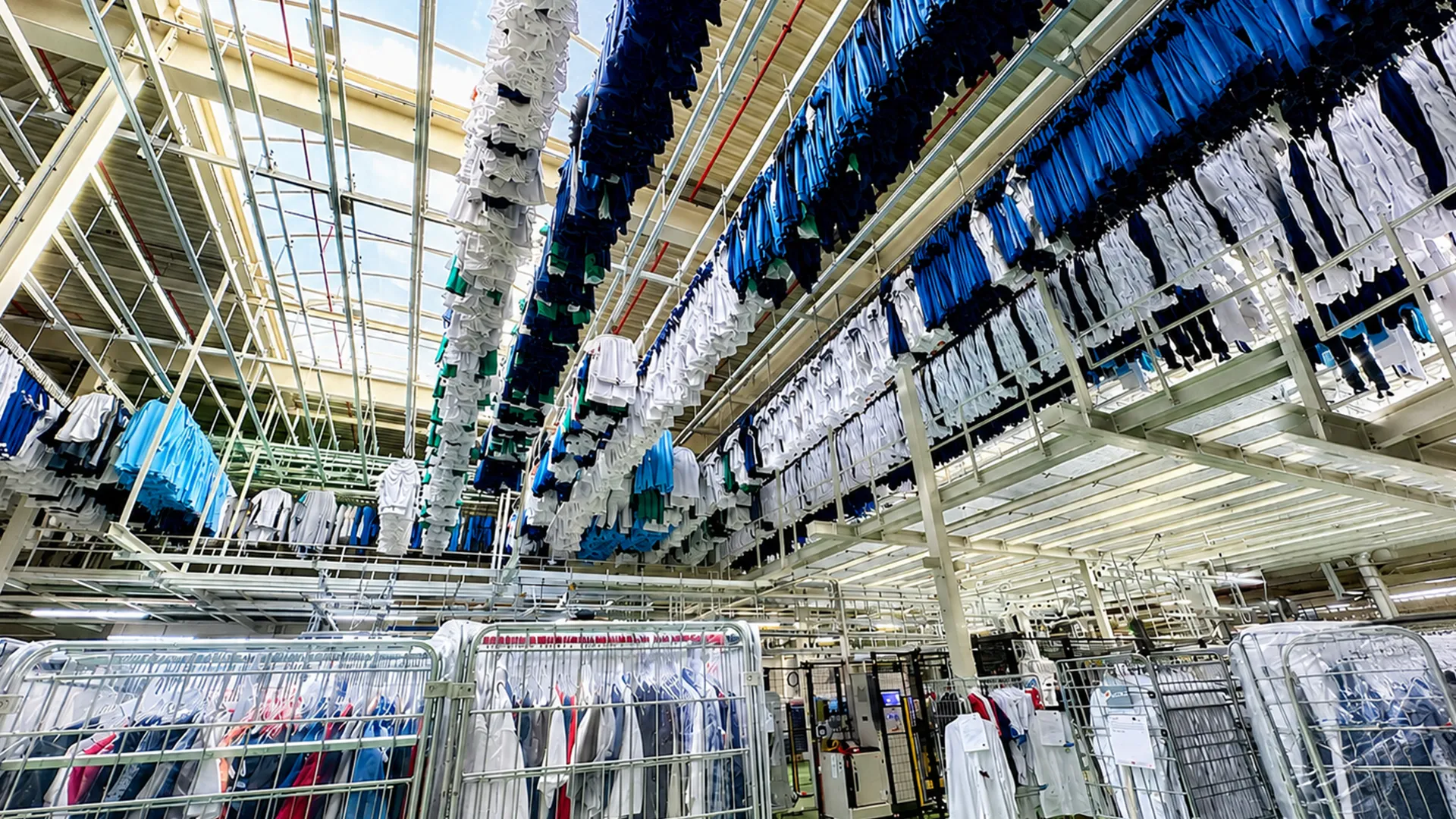
Os prestadores de serviços têxteis gerem os têxteis reutilizáveis através de um ciclo de serviço recorrente. A roupa de cama, os uniformes, as toalhas, os tapetes e outros artigos têxteis limpos são distribuídos ou entregues nas instalações dos clientes, recolhidos após a utilização como artigos sujos, recebidos e triados na lavandaria, submetidos a processos de lavagem e acabamento, agrupados de acordo com as encomendas dos clientes e expedidos para o ciclo de serviço seguinte.
A qualquer momento, o stock de têxteis pode encontrar-se na lavandaria como stock limpo, estar a ser utilizado nas instalações dos clientes, em trânsito, a passar pelo processo de produção da lavandaria, atribuído a uma encomenda de saída ou retirado de serviço para inspeção, reparação ou abate.
À medida que os volumes de têxteis e as redes de clientes crescem, a contagem manual, a leitura individual de códigos de barras e os registos baseados em folhas de cálculo podem tornar-se difíceis de manter. As empresas podem não dispor de uma visão fiável do stock disponível, do inventário mantido nas instalações dos clientes, das mercadorias em trânsito, do trabalho em curso e das diferenças entre as quantidades esperadas e as registadas.
Para muitos operadores, a tecnologia RFID aplicada aos serviços têxteis constitui uma forma mais eficiente de identificar os ativos têxteis e registar os seus movimentos em pontos de controlo definidos. No entanto, a adoção da tecnologia RFID não deve começar pela própria tecnologia. Deve começar por uma compreensão clara do problema operacional que a empresa precisa de resolver.
Como funciona a tecnologia RFID nos serviços têxteis
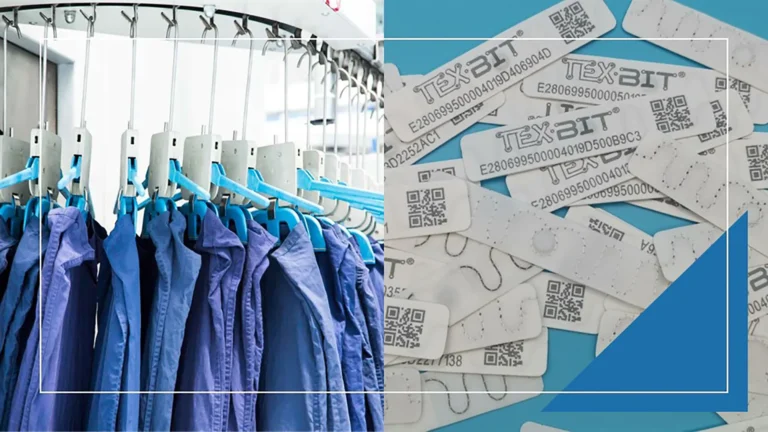
A implementação de RFID em têxteis combina normalmente etiquetas RFID laváveis, dispositivos de leitura e antenas, e software ou uma plataforma RFID.
A cada peça têxtil é atribuída uma identidade digital única através de uma etiqueta RFID. Quando os têxteis etiquetados passam por uma zona de leitura configurada, o leitor capta os seus identificadores e envia os dados para o software. O sistema pode então atualizar registos como o estado operacional, a atribuição ao cliente, o histórico de processamento, o número de lavagens ou as transações de envio e devolução.
Ao contrário da leitura de códigos de barras, a tecnologia RFID não exige que cada artigo têxtil seja apresentado individualmente a um leitor. É possível identificar vários artigos etiquetados num ambiente de leitura adequado, o que torna esta tecnologia particularmente útil em pontos de transação de grande volume, tais como a receção de mercadorias, a colocação em stock de mercadorias limpas, a preparação de encomendas, a expedição e a reconciliação de devoluções de clientes.
A tecnologia, por si só, não determina o significado de um evento de leitura. Uma leitura na receção de mercadorias pode confirmar a chegada de roupa suja proveniente de um cliente. Uma leitura na colocação em stock de roupa limpa pode indicar que a produção de lavandaria foi concluída e que as peças estão disponíveis para atribuição. Uma leitura na expedição pode confirmar que os têxteis corretos foram liberados de acordo com a encomenda de um cliente.
Por conseguinte, a fiabilidade dos registos depende de mais do que apenas a legibilidade das etiquetas. Exige uma conceção adequada da zona de leitura, transações claramente definidas, regras de software adequadas e procedimentos operacionais consistentes.
Onde a tecnologia RFID pode criar valor
A tecnologia RFID gera o máximo valor quando melhora o controlo em pontos-chave de transação e de transferência. O seu objetivo não é simplesmente identificar um artigo têxtil, mas sim fornecer informações mais fiáveis para a gestão de inventário, a reconciliação com os clientes, o controlo da circulação e as decisões operacionais diárias.
Melhorar a visibilidade do inventário
O inventário têxtil está distribuído por diferentes estados operacionais e locais. Alguns artigos podem estar armazenados como stock limpo na lavandaria, enquanto outros se encontram nas instalações dos clientes, em trânsito, a passar pelas etapas de triagem de sujidade, lavagem ou acabamento, ou à espera de inspeção e reparação.
Os inventários tradicionais fornecem apenas um instantâneo temporário. A informação pode ficar rapidamente desatualizada, uma vez que os têxteis são recolhidos, recebidos, processados, distribuídos, expedidos, entregues e colocados novamente em utilização.
A tecnologia RFID permite criar registos de transações mais atempados em pontos específicos de receção, armazenamento, preparação de encomendas, expedição, entrega e devolução. Isto ajuda as empresas a conciliar as quantidades previstas com as registadas e a obter uma visão mais clara da forma como o stock têxtil se distribui ao longo do ciclo de serviço.
A tecnologia RFID não deve, no entanto, ser entendida como um sistema de localização contínua em tempo real. A visibilidade depende dos pontos de leitura instalados e do facto de os movimentos dos têxteis passarem sistematicamente por esses pontos de controlo.
Reduzir as variações de stock e melhorar a prestação de contas
As discrepâncias de inventário podem resultar de devoluções incompletas por parte dos clientes, quantidades de entrega incorretas, mistura entre clientes, classificação errada, eliminação não registada, danos ou têxteis que saem do processo de serviço definido.
Sem registos fiáveis das transações, uma empresa pode identificar uma variação de existências, mas dispor de informações limitadas sobre onde esta ocorreu.
A tecnologia RFID permite obter um registo mais claro da última transação confirmada, da atribuição ao cliente ou do estado operacional de um artigo ou lote. Isto contribui para uma investigação mais rápida, uma reconciliação mais precisa ao nível do cliente e uma melhor prestação de contas em todas as operações de lavandaria, atividades de transporte e pontos de entrega ao cliente.
Com o passar do tempo, os registos podem também revelar discrepâncias recorrentes associadas a determinados clientes, percursos, categorias têxteis, departamentos ou fases do ciclo de serviço.
Reduzir a contagem e a reconciliação manuais
As operações têxteis de grande volume dependem frequentemente da contagem manual ou da leitura individual de códigos de barras durante a receção de mercadorias, as verificações de stock, a preparação de encomendas, a verificação de expedição e o processamento de devoluções dos clientes.
A tecnologia RFID permite identificar vários artigos têxteis num único processo de leitura, reduzindo a necessidade de manusear e digitalizar cada peça individualmente. Isto é particularmente útil quando grandes lotes passam por áreas controladas de receção, armazenamento, embalagem ou expedição.
O objetivo não é necessariamente substituir os colaboradores. Trata-se de reduzir o trabalho repetitivo de identificação e reconciliação, para que os colaboradores se possam concentrar nas exceções, no controlo de qualidade, na coordenação da produção, nos requisitos dos clientes e no desempenho dos processos.
O que é necessário para a adoção da tecnologia RFID
O valor potencial da tecnologia RFID deve ser avaliado em conjunto com as alterações à infraestrutura e aos processos operacionais necessárias para a sua implementação.
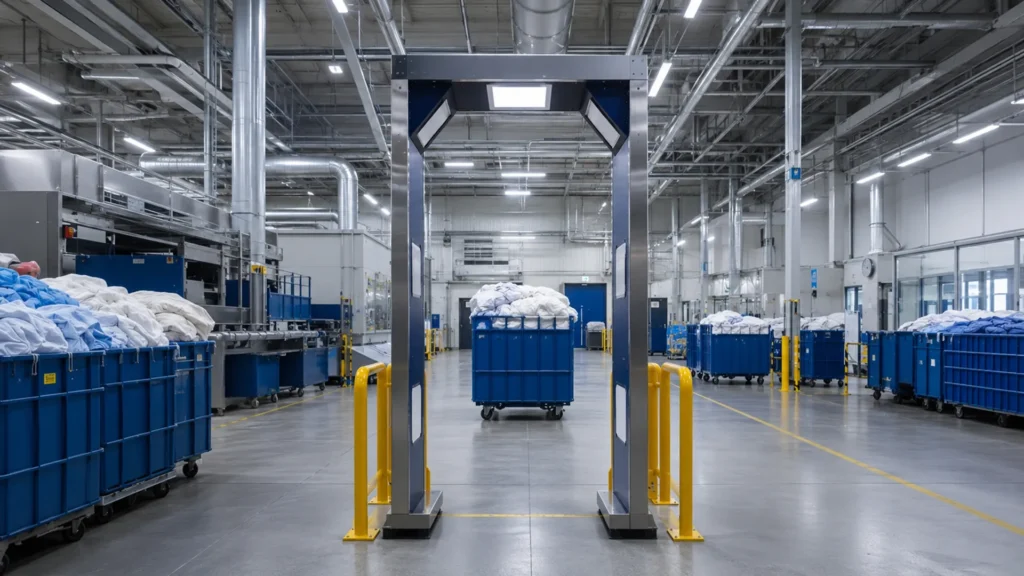
Uma implementação pode incluir etiquetas RFID laváveis, leitores fixos ou portáteis, antenas, portais, armários, configuração de software, integração de sistemas, instalação, validação e formação do pessoal. O investimento total depende do volume de têxteis, da estrutura da clientela, do número de pontos de transação necessários, do nível de automatização pretendido e do âmbito do software.
O desempenho da leitura deve ser validado em condições reais de funcionamento. O tipo e a localização da etiqueta, a composição do tecido, o estado húmido ou seco, a densidade do lote, a compressão no interior de carrinhos ou sacos, a velocidade do transportador, as estruturas metálicas circundantes, o posicionamento da antena e a configuração do leitor podem todos afetar os resultados.
Por exemplo, uma zona de leitura concebida para têxteis soltos e secos na fase de preparação de encomendas pode não funcionar da mesma forma quando se trata de ler artigos sujos e comprimidos na receção de mercadorias. Cada ponto de controlo deve, por isso, ser concebido em função do estado real dos têxteis e do método de manuseamento.
A empresa deve também decidir quais as transações que têm de ser registadas. Os pontos de controlo relevantes podem incluir a receção de roupa suja, a armazenagem de roupa limpa, a preparação de encomendas, o envio de saída, a entrega ao cliente e a reconciliação das devoluções dos clientes. Podem ainda ser adicionados pontos de leitura adicionais durante a lavagem, a centrifugação ou o acabamento, quando forem necessários registos do estado do processamento ou do ciclo de lavagem.
Uma implementação prática não requer infraestrutura RFID em todas as fases do processo de lavandaria. Deve ser dada prioridade aos pontos que geram registos úteis e apoiam uma ação operacional definida.
As etiquetas e os leitores podem gerar dados, mas esses dados só se tornam valiosos quando contribuem para melhorar uma decisão, uma transação ou um processo de controlo.
A tecnologia RFID para serviços têxteis é adequada para o seu negócio?
A adequação da tecnologia RFID depende da relação entre o problema operacional, o valor esperado e a infraestrutura necessária para criar registos de transações fiáveis. A escala operacional é importante, mas o volume de têxteis, por si só, não determina se a tecnologia RFID irá proporcionar um resultado que valha a pena.
Quando vale a pena avaliar a tecnologia RFID
A tecnologia RFID revela-se, em geral, mais útil em operações com grandes volumes de têxteis, movimentos frequentes entre a lavandaria e as instalações dos clientes, um trabalho substancial de reconciliação manual ou diferenças recorrentes entre o inventário esperado e o registado.
A lavandaria industrial pode utilizar a tecnologia RFID para otimizar a receção de mercadorias, o controlo de stock em bom estado, a verificação de encomendas, a expedição de mercadorias e a reconciliação das devoluções dos clientes. A grupo hoteleiro ou organização do setor da saúde pode utilizá-lo para melhorar a visibilidade do inventário de roupa de cama existente em cada propriedade ou instalação e para reforçar a transferência entre as instalações do cliente e a lavandaria.
Prestadores de serviços uniformizados pode utilizar a tecnologia RFID para gerir a atribuição de peças de vestuário, os saldos de stock ao nível do cliente, as transações de emissão e devolução, bem como a circulação das peças de vestuário entre o processo de lavandaria e a utilização pelo cliente.
Pode valer a pena avaliar a tecnologia RFID quando a contagem física demora muito tempo, os saldos por cliente são difíceis de reconciliar, os custos de substituição de têxteis são significativos ou os registos atuais não proporcionam um controlo adequado sobre o stock mantido na lavandaria, nas instalações dos clientes e em trânsito.
Quando a RFID pode não ser a principal prioridade
A tecnologia RFID pode não ser a principal prioridade para uma operação com baixos volumes de têxteis, um fluxo de trabalho simples numa única unidade, níveis de stock estáveis, controlos manuais fiáveis e variações de inventário limitadas.
Também pode ser difícil justificar essa medida quando não existe um problema de controlo claramente definido, não há um responsável pelo processo nem um plano para dar seguimento às informações recolhidas.
Mesmo uma grande empresa pode ter dificuldade em tirar partido da tecnologia RFID se as transferências de responsabilidade para o cliente forem inconsistentes, se os pontos de transação estiverem mal definidos ou se os têxteis conseguirem contornar o processo de leitura exigido.
A instalação de equipamento RFID sem primeiro padronizar o fluxo de trabalho subjacente pode gerar dados adicionais sem melhorar o controlo do inventário ou das transações.
Concentrar-se no problema empresarial
A avaliação não deve começar pela questão de saber que etiqueta RFID, leitor ou antena adquirir. Deve começar pelo resultado operacional que a empresa pretende melhorar.
A pergunta mais útil não é simplesmente:
A tecnologia RFID permite rastrear os nossos têxteis?
A questão mais importante é:
Que problema relacionado com o inventário, as transações ou a reconciliação é que a tecnologia RFID irá resolver e de que forma os dados resultantes irão melhorar as operações diárias?
Quando o problema empresarial, os pontos de controlo, os procedimentos operacionais e o valor esperado estão claramente definidos, torna-se muito mais fácil determinar se a tecnologia RFID constitui um investimento viável.
Comece por definir um caso de utilização
Uma empresa prestadora de serviços têxteis não precisa de digitalizar todas as fases do ciclo de serviços de uma só vez.
Um projeto prático de RFID começa normalmente com um caso de utilização claramente definido, como a verificação de encomendas de saída, o inventário de mercadorias limpas, a reconciliação de mercadorias sujas à entrada, o controlo de stock nas instalações do cliente, o registo dos ciclos de lavagem ou o controlo dos movimentos de têxteis entre uma lavandaria e uma instalação específica.
Começar com um fluxo de trabalho bem definido facilita a validação do desempenho das etiquetas, da conceção da zona de leitura, da precisão das transações, das regras de software e da aceitação por parte do pessoal. Ajuda também a empresa a identificar lacunas nos processos antes de alargar a implementação a locais de clientes adicionais, percursos de serviço ou fases operacionais.
O valor esperado deve ser avaliado em função de indicadores operacionais relevantes. Dependendo do projeto, estes podem incluir uma redução do tempo de contagem, menos desvios no envio, saldos dos clientes mais precisos, uma melhor reconciliação das devoluções, custos mais baixos de substituição de têxteis ou registos mais fiáveis do stock limpo.
Uma avaliação realista deve comparar estas melhorias esperadas com o custo das etiquetas RFID, da infraestrutura de leitura, do software, da implementação, da formação e da gestão contínua do sistema.
Conclusão
A tecnologia RFID pode ajudar os prestadores de serviços têxteis a melhorar a visibilidade do inventário, reduzir as tarefas repetitivas de contagem e reconciliação, reforçar o controlo da entrega e receção da roupa dos clientes e criar registos de transações mais fiáveis ao longo de todo o ciclo dos serviços têxteis.
No entanto, a tecnologia RFID é mais eficaz quando é implementada para resolver um problema operacional claramente definido. É importante dispor de etiquetas, leitores e software adequados, mas a conceção das transações, a disciplina no fluxo de trabalho, a aceitação por parte do pessoal e a utilização consistente dos dados são igualmente fundamentais.
Antes de investir, as empresas devem avaliar os seus volumes de têxteis, a rede de clientes, as rotas de serviço, a distribuição de stock, os processos de reconciliação atuais, as variações de stock e as decisões operacionais que se espera que os dados de RFID venham a apoiar.
Quando estes elementos estão alinhados, a tecnologia RFID pode tornar-se uma ferramenta prática para melhorar a gestão do inventário e a circulação de produtos têxteis, em vez de ser apenas mais uma camada tecnológica.
Para conhecer mais detalhadamente as vantagens operacionais, leia O que o sistema de rastreio de roupa com RFID pode fazer pela sua empresa?
Não tem a certeza se a tecnologia RFID se adequa à sua atividade?
Fale-nos sobre os seus volumes de produção têxtil, fluxos de trabalho e desafios atuais. Podemos ajudá-lo a avaliar se a tecnologia RFID é um próximo passo viável.